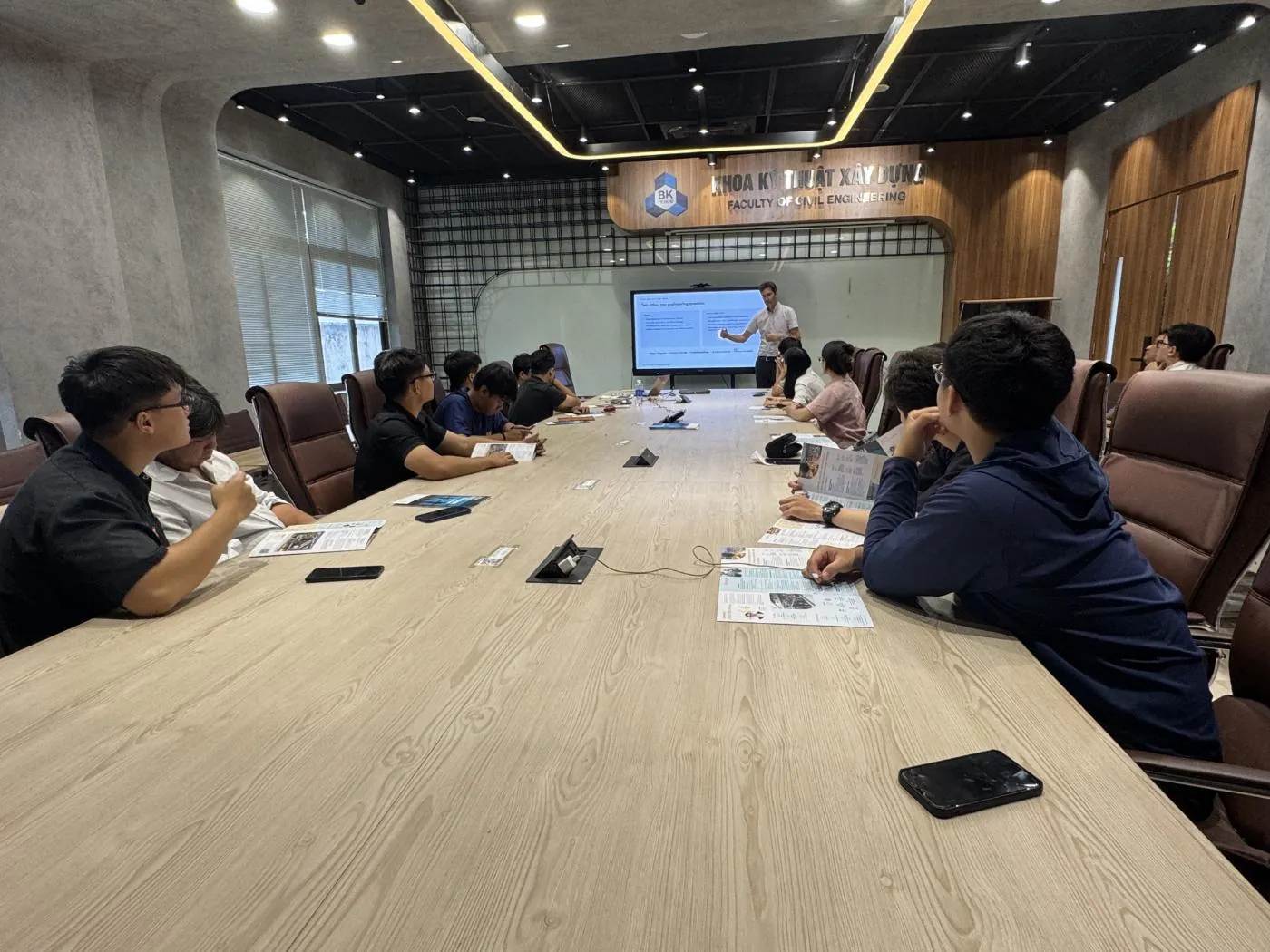
Study at PFIEV: programme presentation to students, Faculty of Civil Engineering
HOME / STUDY

Five years to become an engineer.

An entrance exam after high school, two years of preparatory cycle, three years of engineering cycle, a specialisation, a professional option, internships, a final-year project and an engineering degree conferring the French grade of Master.

ADMISSION

Joining PFIEV.

Admission takes place after high school, through an entrance exam, at one of the four Vietnamese universities running the programme. Parallel admission is possible in the third year.

1

You sit the entrance exam of one of the four partner universities.

2

You complete two years of scientific preparatory cycle.

3

You choose your specialisation when entering the engineering cycle.

4

You choose your professional option in the fifth year.

Frequently asked questions

Do I need to speak French already?

No. French is taught during the programme, and the degree requires B1 level in French and English.

Can I join during the programme?

Yes, parallel admission is possible in the third year.

What are the tuition fees?

They are set by each Vietnamese university: please refer to their websites.

Can I study in France?

Yes, several schemes exist: one-semester mobility, double degree, internship, final-year project, master’s or doctorate.

THE 5-YEAR CURRICULUM

The curriculum, year by year.

Five years, 300 ECTS credits, a progression modelled on the French grandes écoles of engineering: solid scientific foundations, then increasingly focused specialisation, backed by projects and industry.

SCIENTIFIC PREPARATORY CYCLE
1st & 2nd

Mathematics, physics, computer science, engineering sciences, languages. The foundation for specialisation.

ENTRANCE EXAM
ENGINEERING CYCLE
3rd

Entry into the specialisation. First professional courses.

CHOICE OF SPECIALISATION
ENGINEERING CYCLE
4th

Deepening the specialisation, projects, teamwork, economic and management skills.

PROJECTS · MOBILITY
ENGINEERING CYCLE
5th

Professional specialisation option, then a six-month final-year project in a company or a laboratory.

CHOICE OF OPTION · DEGREE

What sets the curriculum apart

A demanding entrance exam and a choice of specialisation halfway through.

Three working languages. B1 level in French and English is required to be awarded the degree.

Economic and management culture built into the curriculum.

Juries and courses involving lecturers from French institutions.

At the end of the programme, the PFIEV degree, conferring the master’s degree, opens the door to both employment and doctoral studies.

SPECIALISATIONS AND OPTIONS

Four specialisations, more than fifteen options, French schools behind each one.

In the fifth year, each student chooses a professional specialisation option. Each option is run by a Vietnamese university and backed by one or more French institutions, which contribute to its curriculum, teaching and juries.

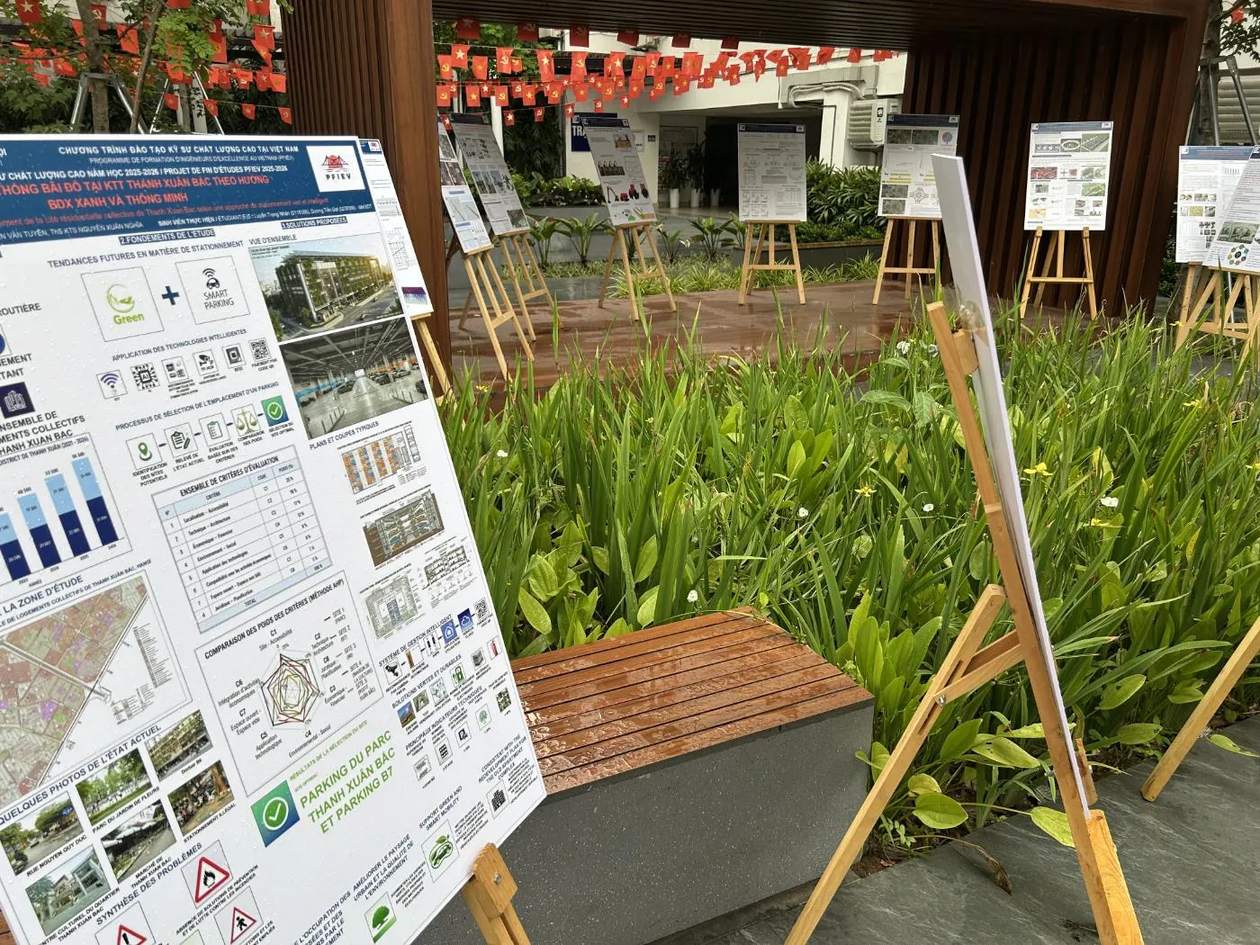
Final-year project panels displayed outdoors

Civil Engineering

École des ponts · INSA Lyon · Grenoble INP – UGA

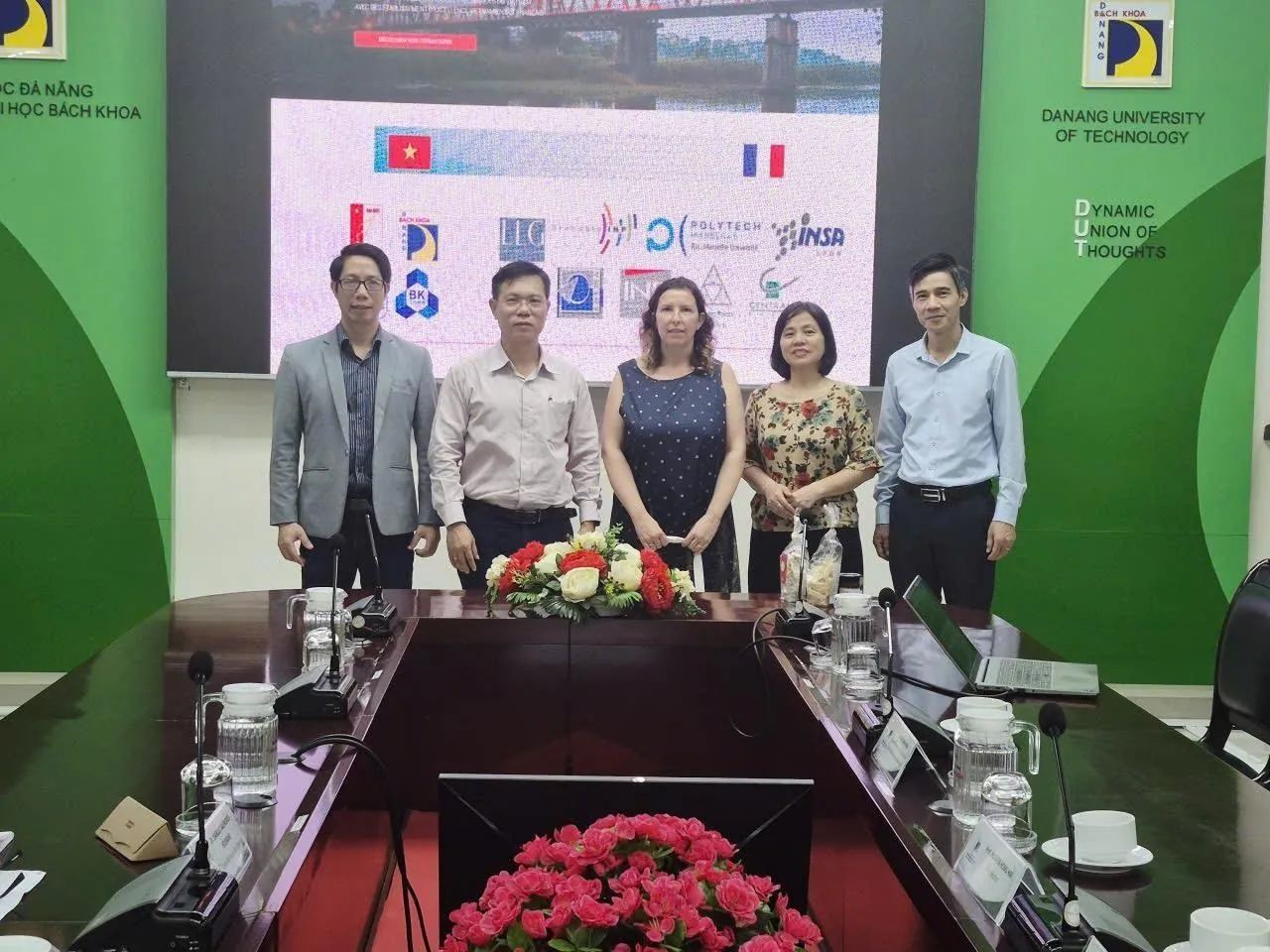
Teaching mission at the University of Science and Technology – The University of Da Nang

Electrical Engineering

Grenoble INP – UGA · Toulouse INP · IMT Atlantique

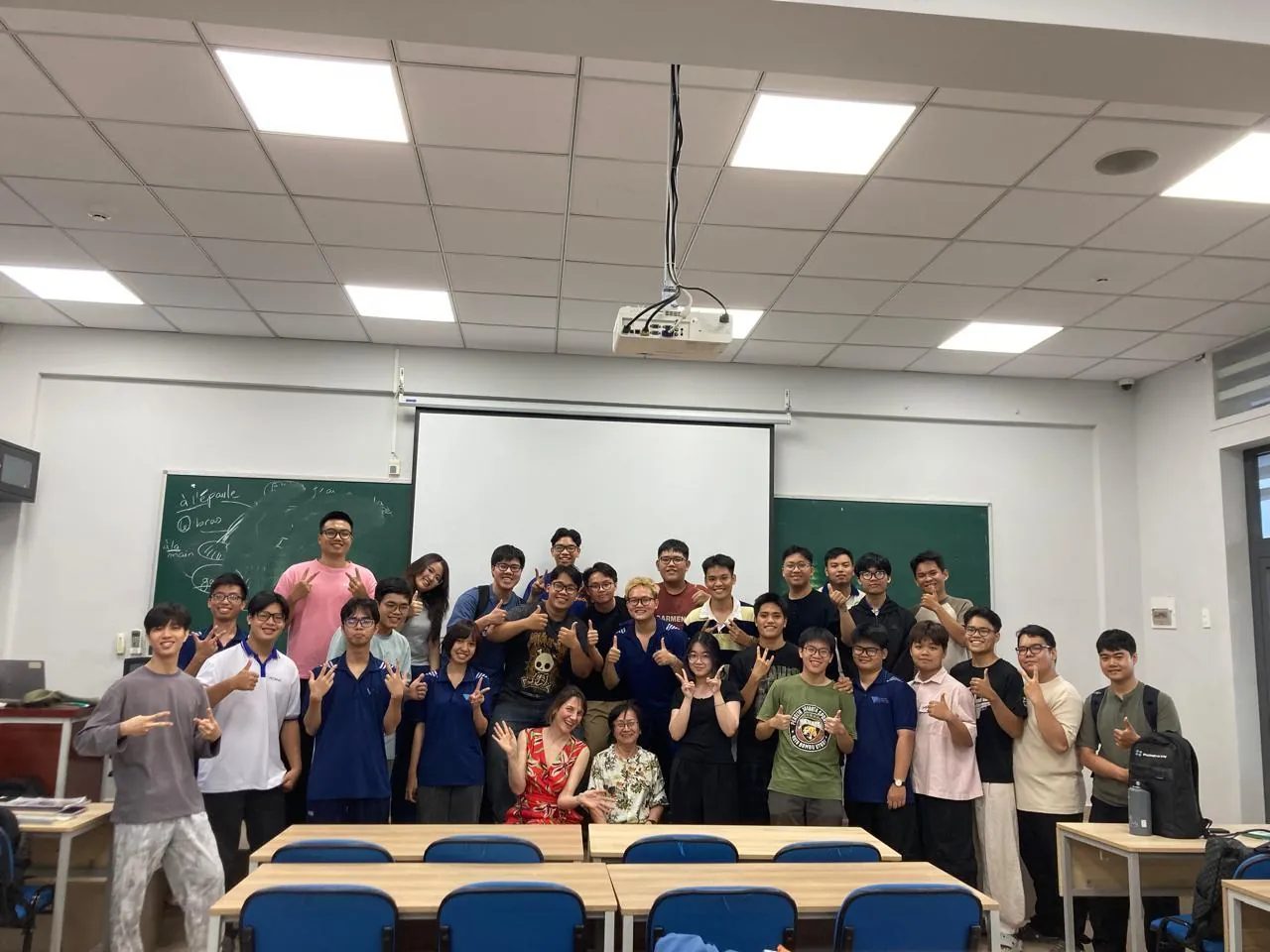
French class with students at Ho Chi Minh City University of Technology

Computer Engineering

Polytech Marseille

Mechanical engineering

Mechanical Engineering

ISAE-ENSMA · Grenoble INP – UGA · CentraleSupélec · École des ponts · INSA Lyon

Preparatory cycle · Lycée Louis-le-Grand

Before specialising, the first two years of the scientific preparatory cycle are taught on the four campuses with the support of Lycée Louis-le-Grand: training of trainers, exchange of practices and curriculum work.

SPECIALISATIONOPTIONUNIVERSITY
Civil EngineeringBuilding and energyHo Chi Minh City University of Technology
Civil EngineeringTransport infrastructureHanoi University of Civil Engineering
Civil EngineeringUrban engineeringHanoi University of Civil Engineering
Civil EngineeringHydraulic engineeringHanoi University of Civil Engineering
Civil EngineeringConstruction materialsHanoi University of Civil Engineering
Civil EngineeringUrban water engineering and managementHo Chi Minh City University of Technology
Electrical EngineeringIndustrial computing and automationHanoi University of Science and Technology
Electrical EngineeringIndustrial computingUniversity of Science and Technology – The University of Da Nang
Electrical EngineeringEnergy systemsHo Chi Minh City University of Technology
Electrical EngineeringTelecommunicationsHo Chi Minh City University of Technology
Computer EngineeringSoftware engineeringUniversity of Science and Technology – The University of Da Nang
Mechanical EngineeringAeronauticsHanoi University of Science and Technology
Mechanical EngineeringAeronauticsHo Chi Minh City University of Technology
Mechanical EngineeringMechatronicsHo Chi Minh City University of Technology
Mechanical EngineeringAdvanced materialsHo Chi Minh City University of Technology
Mechanical EngineeringPolymers and compositesHo Chi Minh City University of Technology
Mechanical EngineeringAutomated productionUniversity of Science and Technology – The University of Da Nang
17 option(s) shown. Two options may share the same title on two campuses: each university runs its own option.
INTERNSHIPS AND FINAL-YEAR PROJECT

Two immersions that change a career path.

Work-immersion internships of at least one month, a six-month final-year project in the fifth year. For some, this project takes place in a French laboratory.

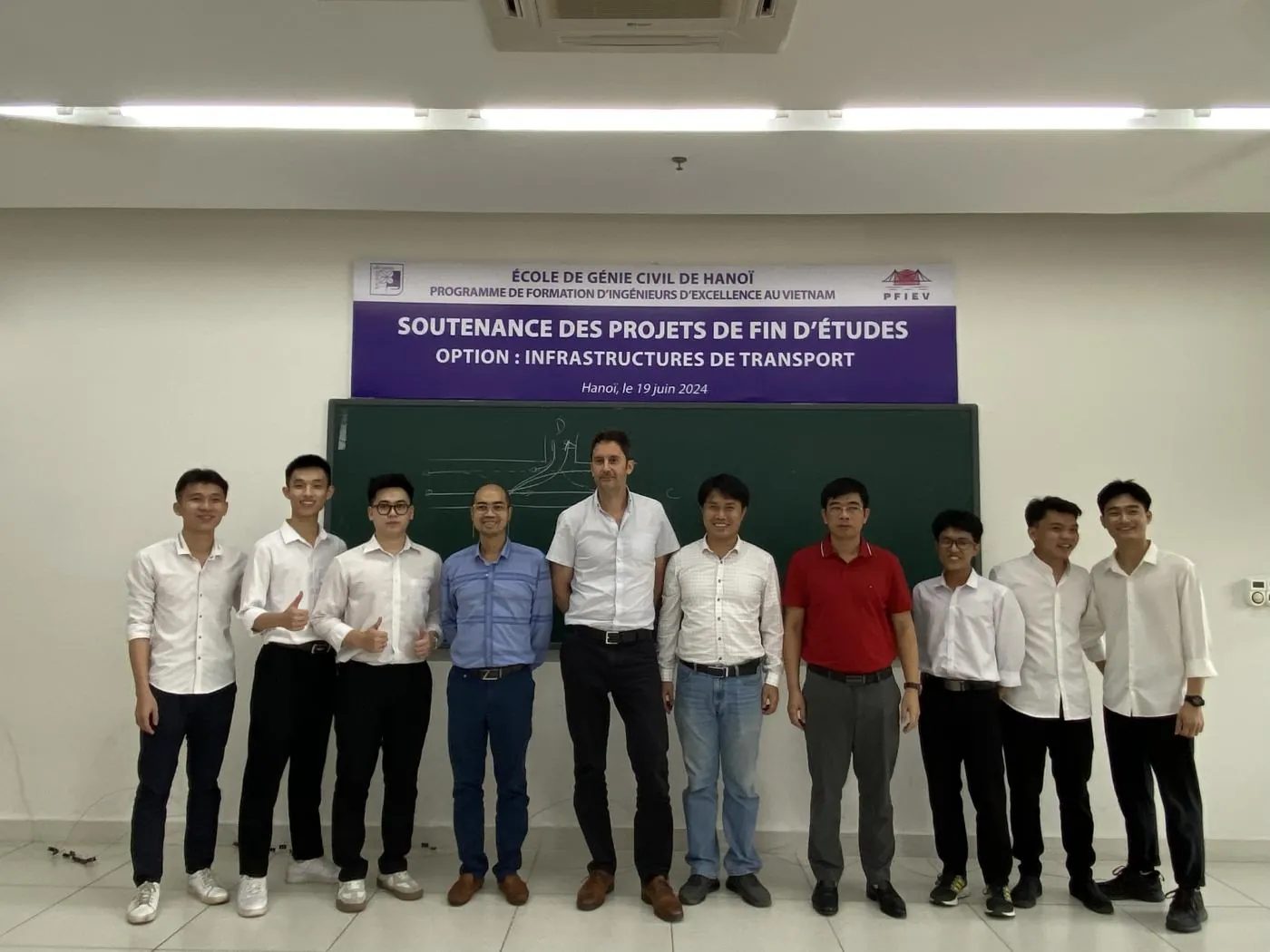
Final-year project defences, Transport Infrastructure option, Hanoi University of Civil Engineering
1
MONTH MINIMUM

Work-immersion internships

One month minimum in a company. It is the first contact with the working world: understanding an organisation, its methods and real constraints. For companies, it is a simple way to identify future recruits.

6
MONTHS · 5TH YEAR

The final-year project

Six months, in a company or a laboratory, under the joint supervision of a lecturer and a professional. Students apply everything they have learned to a real topic. Many graduates are hired at the end of their final-year project.

FEATURED

The final-year project in France

PFIEV enables fifth-year students to carry out their final-year project in a laboratory at one of the nine French institutions of the consortium. The programme grants financial support for mobility, the amount of which is set each year according to available funding.

WHO CAN APPLY

Fifth-year students from the four universities.

HOW

By identifying a topic and a host laboratory, with the support of your university and the French consortium.

WHEN

The call is announced every year in the news section.

WHAT YOU GET

A supervised topic in a French laboratory, mobility support and international experience on your CV.

INTERNATIONAL AND LANGUAGES

Three languages, several continents.

PFIEV trains engineers who work in Vietnamese, French and English, and who thrive in international teams.

Three working languages: Vietnamese, French, English.

B1 level in French and English is required to be awarded the degree.

Part of the science courses is taught in a foreign language, in preparation for defences and mobility.

TIẾNG VIỆT
FRANÇAIS · B1
ENGLISH · B1
01

Academic mobility

One or two semesters of study at a partner French institution.

02

Double degree

A programme leading to the PFIEV degree and that of a French institution.

03

Company internship

A professional immersion in Vietnam or internationally.

04

Final-year project

Six months in a French laboratory, with mobility support.

05

Further studies

Master’s or doctorate, in France or elsewhere, thanks to the master’s degree conferred by the degree.

Erasmus+

The consortium of PFIEV’s French institutions holds the Erasmus+ accreditation for higher education mobility.

CAREERS AND OUTCOMES

After PFIEV.

An engineering degree conferring the French grade of Master, in the sectors where Vietnam invests most: infrastructure, energy, industry, electronics, digital.

Sectors that recruit

Construction, transport infrastructure, urban and hydraulic engineering

Energy, networks and energy systems

Electronics, semiconductors, telecommunications

Computing, software, data and artificial intelligence

Mechanics, mechatronics, materials, aeronautics and automated production

Jobs held

Design engineer, project engineer, production engineer, project manager, R&D engineer, technical consultant, then quickly management roles. Some graduates go on to master’s or doctoral studies, in France and internationally.

Evidence

The vast majority of graduates are employed or pursuing further studies.

Companies founded by programme graduates are now PFIEV partners.

Detailed career paths in the alumni portraits.